Building and Launching the Zenex International E-commerce Site

- Published on
- Client
- Zenex International
- Role
- Senior Full-Stack Developer
- Platform
- Shopify
Overview
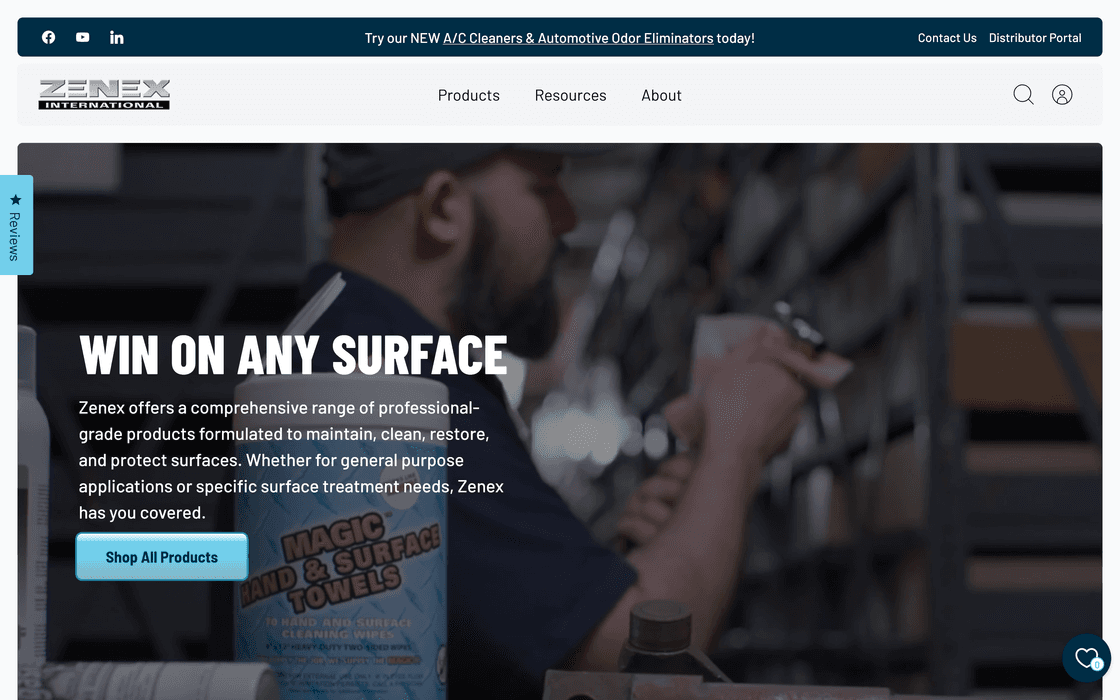
At GM Industrial / Zenex International, I led the architecture, development, and on-time launch of a Shopify e-commerce platform to replace the company's legacy CIMcloud storefront. My responsibilities covered implementation, data migration, redirects, accessibility, QA, DNS cutover, deployment, and production support.
The project brought together the customer-facing storefront and the operational work required to move an existing business onto a new platform. Building the theme was one part of that effort. Preparing the data, coordinating testing, and managing the transition into production were equally important.
Storefront Development
I built and maintained a modular Shopify front end using Liquid, JavaScript, Tailwind CSS, metafields, and custom theme components. This approach gave the storefront reusable building blocks while keeping product data separate from the presentation layer.
The core technologies each served a specific purpose:
- Liquid handled Shopify's templates and dynamic content rendering.
- JavaScript supported interactive storefront behavior.
- Tailwind CSS provided the styling foundation for custom theme components.
- Metafields supported structured custom data within Shopify.
Git-based workflows and automated CI/CD pipelines supported ongoing development and deployment. Version control also provided a clear history of changes as the site moved through implementation, QA, and production support.
Migration and Launch Preparation
Replacing the CIMcloud storefront required work beyond the new site's appearance. I owned the data migration and redirects alongside theme development, bringing those tasks into the same launch process as accessibility and QA.
Redirects were an important part of that transition: existing URLs needed a path into the new storefront. Accessibility work and testing helped prepare the customer experience for launch, while DNS cutover and deployment moved the completed implementation into production.
Treating these responsibilities as part of one project kept the launch focused on the complete storefront experience, from migrated content to the production environment.
Launch Readiness and Cross-Functional QA
I managed launch readiness across 95 Jira issues, coordinating the resolution of 87 and reducing the remaining backlog to eight non-blocking defects. This work included establishing issue intake, prioritization, and cross-functional QA processes.
The distinction between blocking and non-blocking issues mattered. It gave the team a clear basis for assessing readiness and identifying the work that could continue after launch. The platform launched on time, with a defined remaining backlog for follow-up.
Production Support and Follow-On Work
My ownership continued through deployment and production support. The modular theme and version-controlled release process provided a foundation for maintaining the storefront and delivering subsequent changes.
Related work at Zenex has also included architecture and development for a Shopify Plus B2B distributor portal. For that effort, my responsibilities have included serving as the primary technical contact for a contractor-led Sage X3 integration and defining data flows, MVP scope, QA strategy, phased beta, and production cutover. That work extends the company's commerce platform beyond the initial storefront migration.
What the Project Demonstrates
The Zenex site project brought together front-end engineering, platform migration, release management, and production ownership. It also reinforced the value of making launch readiness visible: a working storefront, a coordinated QA process, and a clearly prioritized issue backlog all contributed to the transition from the legacy platform to Shopify.